
Two-phase orthodontic treatment – if an orthodontist has suggested treating your child while they still have baby teeth, you’ve probably heard this term. The idea is simple: a first phase in childhood, a break, and a second phase once all the permanent teeth are in.
It sounds logical – the earlier the better, right? Not always. Here’s when two-phase treatment really makes sense, when it doesn’t and what research shows, so you can ask the right questions.
Contents
What is two-phase orthodontic treatment?
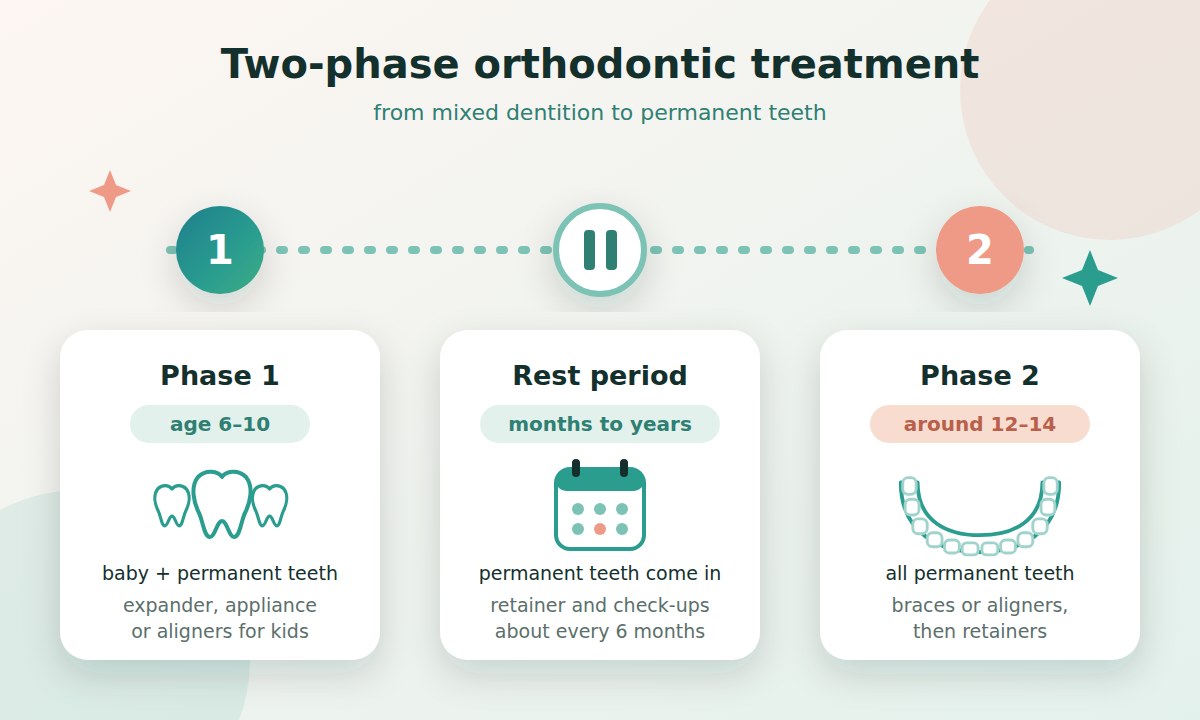
Two-phase orthodontic treatment means two separate courses of treatment with a rest period in between:
| Stage | When | Goal |
|---|---|---|
| Phase 1 | around age 6–10, in the mixed dentition (baby and permanent teeth) | to correct a problem that’s easier to fix while the child is growing |
| Rest period | months to a few years | the permanent teeth come in; check-ups about every 6 months |
| Phase 2 | once all permanent teeth are in, often around 12–14 | final alignment of the teeth and bite |
Most children don’t need two-phase treatment – many problems are treated with a single course in the teenage years. But a first check-up around age 7 is a good idea, to catch the cases where early treatment really does help.
When should my child first see an orthodontist?
The American Association of Orthodontists recommends a first check-up no later than age 7, even if the teeth look fine. Many parents think they should wait for the permanent teeth, but by 7 an orthodontist can already see how the jaws are growing and whether there’s room for the teeth still to come. That doesn’t mean treatment starts straight away – most of the time the answer is “let’s keep an eye on it”.
When does two-phase orthodontic treatment make sense?
A first phase is usually recommended when a problem is easier to fix while the child is growing, or when waiting carries a risk. For example:
- a narrow upper jaw and a crossbite, especially if the lower jaw shifts to one side when the child bites – widening the jaw is easiest before puberty, with a metal expander or the Invisalign Palatal Expander;
- an underbite (the lower front teeth sit in front of the upper ones);
- very prominent upper front teeth – teeth that stick out are easily chipped in a fall or while playing, and early treatment brings them back sooner;
- severe crowding or problems with permanent teeth coming through;
- habits that distort the bite – thumb-sucking, tongue thrusting, mouth breathing (sometimes with the help of myofunctional therapy).
What does research show?
Children with prominent upper front teeth are the best-studied group. When the upper front teeth stick out past the lips, they’re unprotected and take the hit first in a fall or while playing – and 7- to 11-year-olds fall a lot. A large 2018 Cochrane review compared early two-phase treatment with a single course in the teenage years and reached two conclusions:
- early treatment lowers the risk of chipped or knocked-out front teeth, because it brings them back sooner – about 1 in 5 children treated early had such an injury, compared with about 1 in 3 without early treatment;
- there were no other advantages – at the end of treatment, the teeth and jaws looked the same whether treatment started early or in the teenage years.
So two-phase orthodontic treatment isn’t automatically “better”. It’s worth it for specific problems; otherwise it often means more time in appliances, more appointments and a higher total cost for the same final result.
If your orthodontist suggests a first phase, ask: “What exactly will we correct now, and what happens if we wait until the teenage years?” A good orthodontist will explain why early treatment makes sense for your child.
How does each phase work?
Phase 1
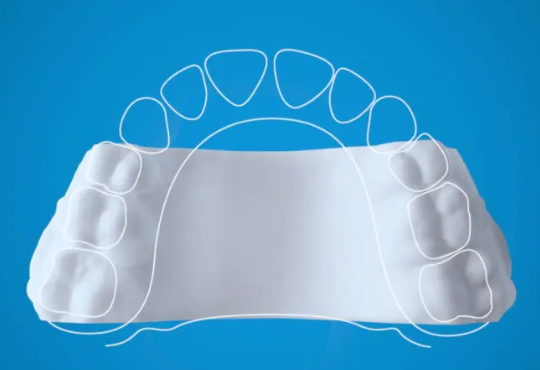
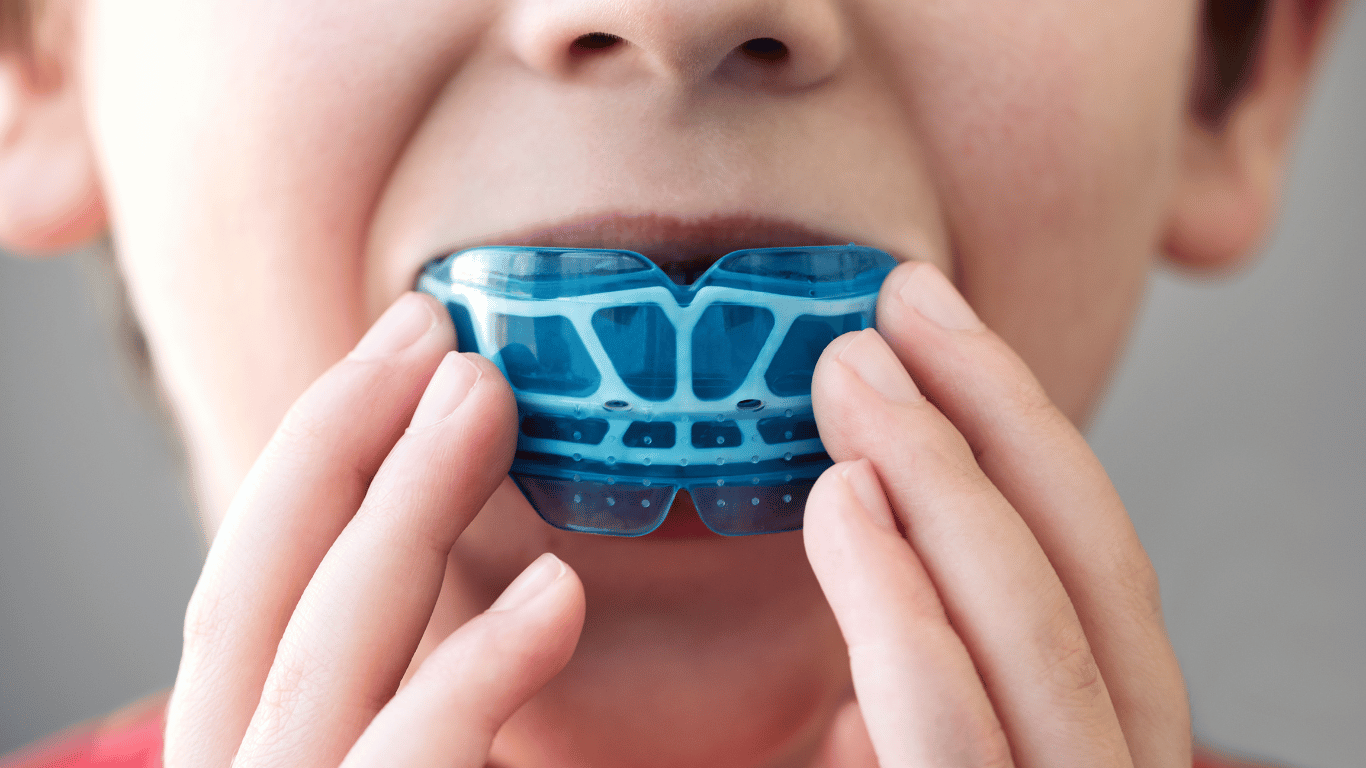
The aim is to help the jaws develop so there’s room for the permanent teeth and the upper and lower jaws fit together. Orthodontists use expanders, removable appliances, partial braces or aligners for children such as Invisalign First. It usually lasts from a few months to a year and a half.
Rest period and monitoring
After phase 1 the teeth aren’t in their final position yet. The permanent teeth come through, and the child often wears a retainer to hold what’s been achieved. The orthodontist checks in about every 6 months and sometimes recommends removing a baby tooth that’s blocking a permanent one.
Phase 2
This starts once all the permanent teeth are in. The goal is the final alignment of the teeth and bite, with braces or aligners – more in aligners vs braces. If phase 1 did its job, phase 2 is often shorter and simpler. Retainers follow – most likely for a long time.
What are the downsides of two-phase orthodontic treatment?
- more total time in appliances and more orthodontist appointments;
- a higher overall cost – two treatments instead of one;
- harder oral hygiene while the child wears an appliance;
- not every child has the motivation and patience for two rounds of treatment;
- discomfort and sometimes food restrictions, depending on the appliance.
Does my child need two-phase orthodontic treatment?
It depends entirely on the problem. Many children can simply wait for their baby teeth to fall out and then have one course of treatment with aligners or braces. Others have a problem where early treatment genuinely helps. Only an orthodontist can tell the difference after an examination – and if anything is unclear, you can always ask for a second opinion. How to choose one is in how to choose an orthodontist.
Sources
- American Association of Orthodontists – What is two-phase orthodontic treatment?
- American Association of Orthodontists – When should a child see an orthodontist?
- Batista K. B. S. L. et al. (2018). Orthodontic treatment for prominent upper front teeth (Class II malocclusion) in children and adolescents. Cochrane Database of Systematic Reviews.
- One phase versus two phase treatment in mixed dentition: a critical review (2015). Journal of Clinical and Diagnostic Research.

Leave a Reply
You must be logged in to post a comment.