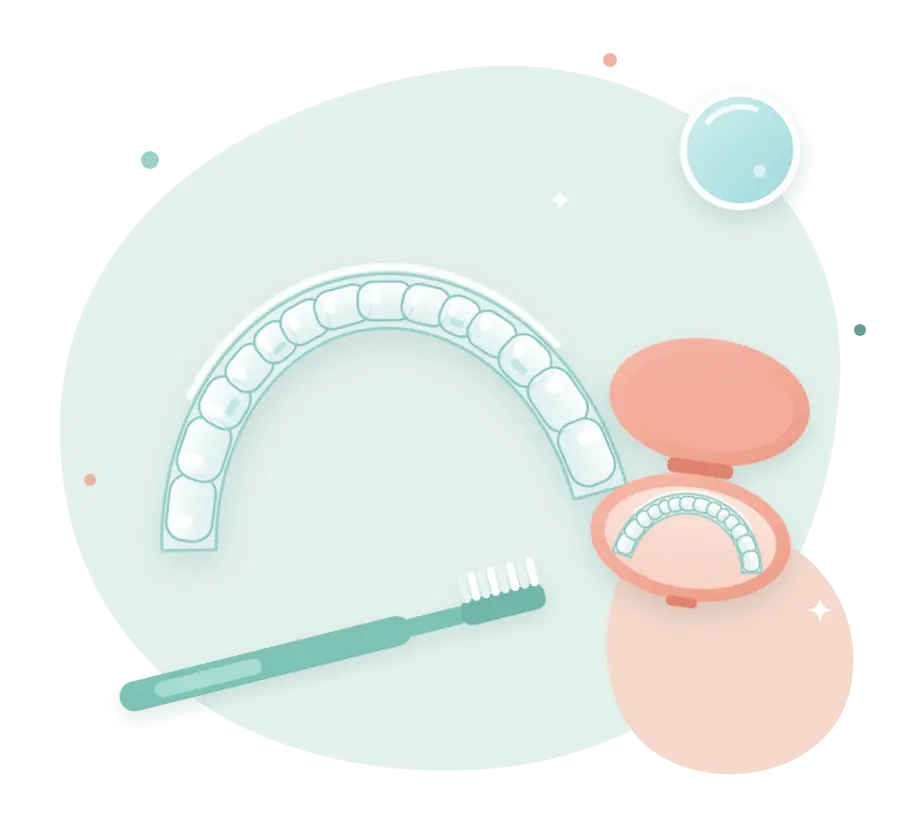

The day finally comes when you say goodbye to aligners, attachments, buttons and elastics. Congratulations! 🎉 Sadly, that’s not quite the end of treatment. Now it’s time for retainers, and most likely for life. It sounds scary, but in practice it’s one tray at night.
I wear Vivera retainers myself after my 3.5 years with Invisalign, and I’m already on my second set. Here you’ll find the different types of retainers, how many hours to wear them, what they cost and what I’ve learned first-hand.
Contents
What are retainers and why do you need them?
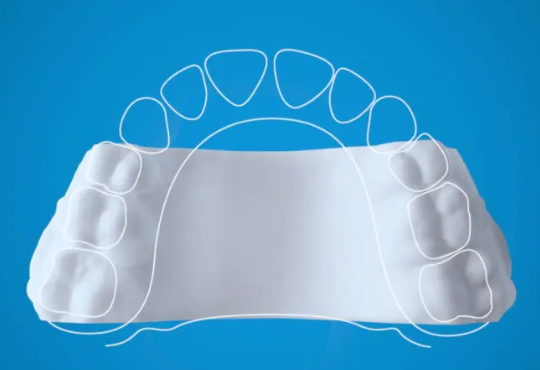
Retainers are appliances that hold your teeth in their new position after braces or aligners. They can be a clear plastic tray, a thin wire bonded behind your teeth, or a combination of plastic and wire.
Why do you need them? Because teeth keep moving throughout life, and after treatment the bone and gums around them need time to settle. In a classic study that followed patients 10 and 20 years after they stopped wearing retainers, only about 10% still had acceptably aligned lower front teeth after 20 years. The study is old and involved braces, but the message is clear: without retainers, teeth drift back.
Retainers aren’t optional. They protect the result you paid for and put up with for months (or years 😅).
How many hours a day should you wear retainers?
There’s no single rule, and orthodontists do this differently. The most common routine for clear retainers is:
- the first few months – most of the day and night, taking them out only to eat and brush;
- after that – nights only;
- after a year or two – some orthodontists allow every other night or a few nights a week.
Interestingly, several randomised trials found no meaningful difference in stability after one year between night-only wear from day one and full-time wear for the first months. So don’t panic if your orthodontist says “nights only”. But don’t cut your hours on your own either: follow the instructions you were given.
Your orthodontist decides how many hours to wear your retainers. And if your retainer feels tighter than usual one morning, that’s a sign your teeth have already started to move.
How long do you need to wear retainers?
Short answer: for as long as you want straight teeth. 😄 The American Association of Orthodontists says you’ll wear retainers to some degree for the rest of your life, and many patients wear them every night for good. The British Orthodontic Society ran a whole campaign around the message “retainers are for life”.
A bonded retainer can stay in for years, but even then orthodontists sometimes add a clear night-time retainer as extra protection.
What happens if you stop wearing your retainers?
Your teeth gradually start moving back towards where they were. At first you’ll notice it as tightness when you put the retainer back in after a break. Skip weeks or months and the retainer may simply not fit any more. Then it’s a new scan, new retainers and sometimes new treatment. There’s nothing more frustrating than going through it all again!
If you’ve missed a few nights and your retainer feels tight, put it back in and wear it a bit more than usual for a few days. If it won’t go in at all or it really hurts, don’t force it: call your orthodontist.
Types of retainers
| Bonded (wire) | Clear (Essix, Vivera) | Hawley (plastic and wire) | |
|---|---|---|---|
| Visibility | invisible | almost invisible | wire visible at the front |
| Do you need to remember it? | no | yes | yes |
| Cleaning | harder – floss threader needed | easy, it comes out | easy, it comes out |
| Durability | can come unstuck | cracks and wears more often | the most durable |
| Typical cost in Europe | €100 – 400 per arch | €100 – 400 per arch; Vivera about €300 – 600 for both | varies by clinic |
Which type of retainers is best? A large 2023 Cochrane review of 47 studies concluded there isn’t enough evidence that any one type is clearly better than another. Differences in stability were under a millimetre. So the choice depends on your case, your habits and your orthodontist’s preference.
Bonded retainers

A thin wire bonded to the inside of your front teeth, usually from canine to canine. There are different types of wire: multistrand, braided, straight or custom-made from a digital model.
Pros: you don’t have to think about it, you can’t lose it, nobody can see it and most of the time you won’t even notice it.
Cons:
- Cleaning is harder – you’ll need a floss threader or interdental brushes, a bit like with braces.
- More plaque and tartar build up around it, so regular professional cleaning is a must.
- It comes unstuck more often than you’d think: in a large 2023 review, about 1 in 3 bonded retainers failed at least once, and around half within 5–6 years. If you feel something loose with your tongue, call your orthodontist.
- Rarely, in about 1% of patients, the wire can nudge a tooth out of place. That’s why bonded retainers still need regular check-ups.
Clear retainers
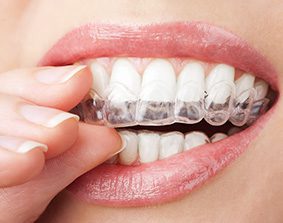
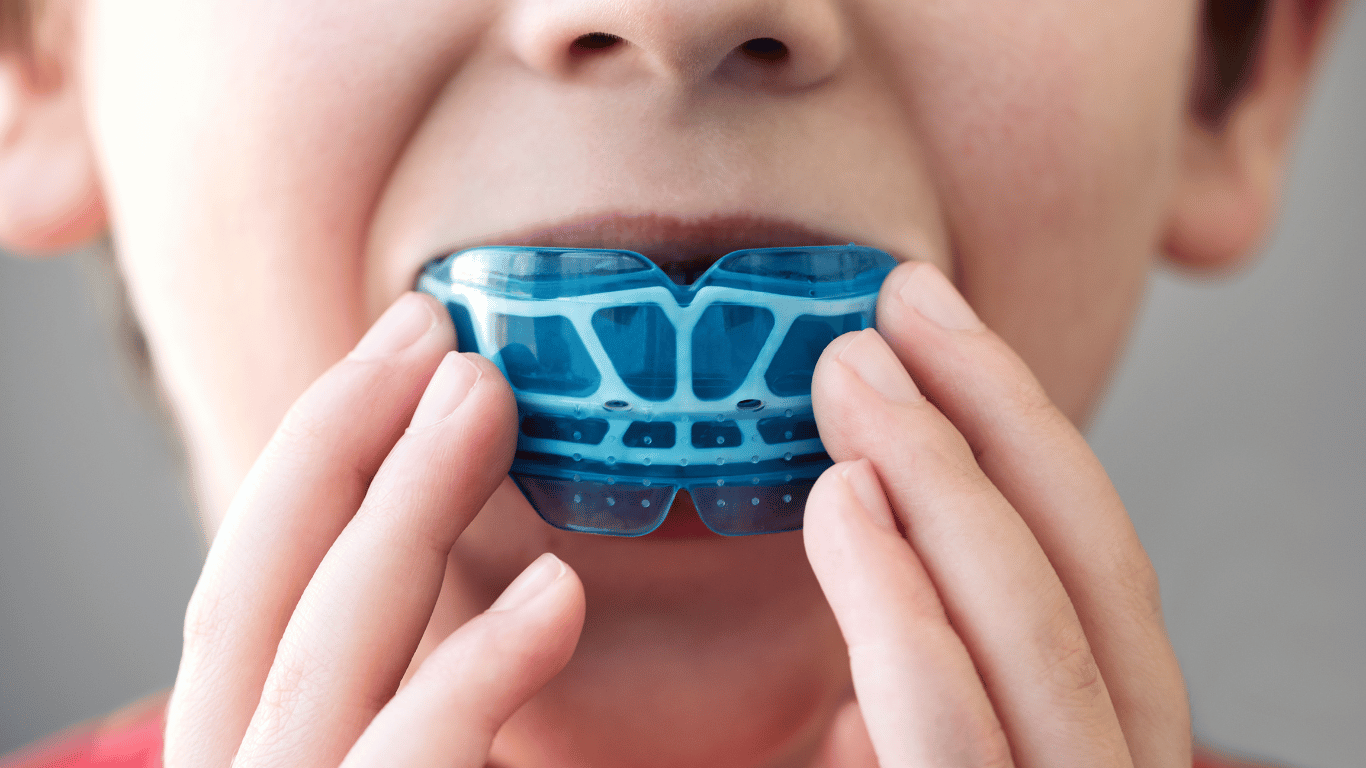
They look like aligners but are thicker, and instead of moving your teeth they hold them in place. They’re made from a scan or impression of your teeth at the end of treatment.
Pros: almost invisible, come out for eating and brushing, cover every tooth, and you clean your teeth as normal.
Cons:
- You have to remember to wear them, and where you left them (the restaurant napkin is their worst enemy 😅).
- They crack and wear out more often and need replacing.
- They can yellow over time, and hot water can warp them.
- Your speech may change slightly for the first few days, just like with aligners.
From my own experience: the most comfortable clear retainers are the ones precisely trimmed along the gum line. They don’t scratch, don’t rub, and you barely feel them. In my view, you usually get that precision when the retainer is made from a 3D scan rather than a traditional impression: the digital model is more accurate and the edge is machine-cut. Hand-trimmed retainers made on a plaster model can be good too, but a lot depends on the technician.
Before ordering clear retainers, ask whether they’ll be made from a 3D scan and how they’re trimmed along the gums. The difference in comfort is huge.
Hawley retainers
The classic removable retainer: an acrylic plate against the roof of your mouth with a wire across the front teeth. It’s more durable than clear retainers and lets your teeth “settle” into the bite better, but the wire is visible. It’s less common after aligners.
Vivera retainers

Vivera® are the official Invisalign retainers, made by Align, the same company. They’re made from the digital model of your teeth at the end of treatment, which is kept on file so you can easily order new ones. They usually come in packs of 3 or 4, so you have spares. Align says the material is stronger than standard clear retainers, and in one lab comparison Vivera did wear the least of the materials tested. Across Europe, a set for both arches typically costs around €300–600 and often isn’t included in the treatment price – more in clear aligner cost in Europe.
My experience: I’m already on my second set of Vivera. The first set looked perfectly fine, with nothing visibly worn. But when I tried a new one from the pack after about a year, I realised how loose the old one had become: the new one felt noticeably tighter. Over time the plastic absorbs moisture and wears down, even when you can’t see it.
Retainers lose their grip before they look worn. Ask your orthodontist how often to switch to a new one from the pack. For me, the difference after a year was huge.
Does ordering Vivera end your treatment? I’d heard (and even written here before) that ordering Vivera “closes” your Comprehensive package and you lose your free refinements. I checked: according to Invisalign’s official terms, Vivera retainers can be ordered at any time and don’t change your package’s expiry date. Free additional aligners end when the package expires: 5 years for Comprehensive, or 3 years for the 3-refinement option. The detail that really matters is different: retainers are made from the final position of your teeth. If you then have a refinement and your teeth move, they won’t fit any more. So ask your orthodontist when the best time is to order them.
How to clean clear retainers
- Rinse them in lukewarm water every time you take them out. Never hot – they warp.
- Clean them with a soft brush and mild soap or a retainer cleaner. Toothpaste scratches the plastic and makes it cloudy.
- Cleaning tablets are handy, but they don’t replace brushing.
- If you have an ultrasonic cleaner, lab tests show it does the best job of keeping them clear.
- When they’re not in your mouth, they’re in their case. Not in a napkin, not in your pocket. 😄
Retainers after aligners: is there a difference?
Not really. A 2025 review found similar stability after aligners and after braces, although follow-up in the studies was short. The rules are the same: retainers every night, regular check-ups, and replace them when they wear out. Still deciding between the two? Read aligners vs braces.
Sources
- Martin C. et al. (2023). Orthodontic retention procedures for stabilising tooth position after treatment with braces. Cochrane Database of Systematic Reviews.
- Aye S. T. et al. (2023). Failure rates of fixed orthodontic bonded retainers: a systematic review and meta-analysis. European Journal of Orthodontics.
- Thickett E., Power S. (2010). A randomized clinical trial of thermoplastic retainer wear. European Journal of Orthodontics.
- Krämer A. et al. (2023). Vacuum-formed retainers versus bonded retainers: a 5-year randomized trial. European Journal of Orthodontics.
- Little R. M., Riedel R. A., Artun J. (1988). An evaluation of changes in mandibular anterior alignment from 10 to 20 years postretention. AJODO.
- Kučera J., Marek I. (2016). Unexpected complications associated with mandibular fixed retainers. AJODO.
- Alfadil A. et al. (2024). Wear and water absorption of thermoplastic retainer materials. Clinical Oral Investigations.
- Huang et al. (2025). Effects of cleaning methods on clear retainers. Clinical Oral Investigations.
- Alhafi et al. (2025). Stability after clear aligner versus fixed appliance treatment: a systematic review. European Journal of Orthodontics.
- American Association of Orthodontists – Will I need to wear retainers? (2025)
- British Orthodontic Society – Retainers.
- Align Technology – Vivera retainers FAQ.
- Invisalign Terms and Conditions (Australia/New Zealand distributor, 2024) – Vivera orders and treatment expiry.

Leave a Reply
You must be logged in to post a comment.