

Contents
So you’ve decided to straighten your teeth with aligners – but who do you actually trust with that job? Here’s how to choose an orthodontist for aligners you’ll be handing your teeth (and a not-so-small pile of money) to for the next year or two. 😅

When I started, clear aligners were still fairly new where I live, and there were hardly any patients who’d finished treatment that you could ask. Today it’s the opposite: it feels like every other clinic offers aligners, which makes it both easier and harder to choose an orthodontist. Here’s what I’d check and discuss before trusting anyone with your smile.
Experience and qualifications
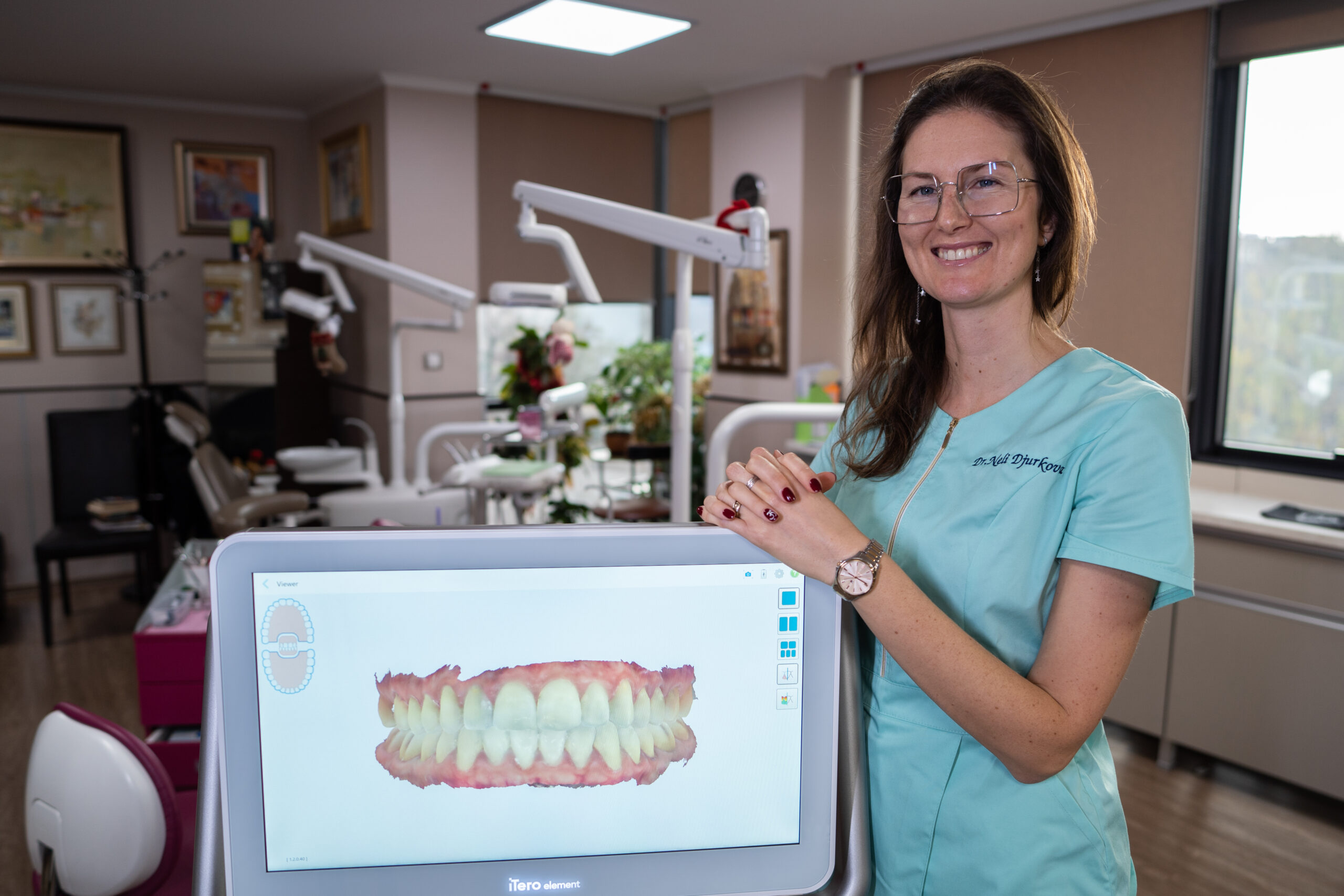
Invisalign and other aligner brands let general dentists – not just orthodontists – offer aligner treatment. That’s completely legal. But my advice is simple: choose an orthodontist. Orthodontists spend years of extra training on exactly how teeth and jaws move, and aligner treatment is orthodontic treatment, not a cosmetic add-on. So ask whether your doctor is a specialist orthodontist or a general dentist.
For me personally, it mattered that my doctor was an orthodontist with plenty of hands-on aligner experience – specifically with Invisalign, not just braces, because the two are completely different ways of working.
Honestly, how you choose an orthodontist might be the single most important decision you make for your whole treatment. Don’t be lured in by a low price, and don’t go with someone inexperienced. Mistakes can cost you a lot of time, money and nerves.
How to check that your doctor is really an orthodontist
Before you choose an orthodontist, check them out. Most countries have a public register where you can look up a dentist and see their specialty. In the UK, the General Dental Council keeps specialist lists, including orthodontics. In the US, the American Association of Orthodontists has a “Find an Orthodontist” tool. In Bulgaria, where I’m from, the Bulgarian Dental Association has a public register. It takes 30 seconds and saves you a lot of guessing. 🕵️♀️
A great orthodontist for aligners = orthodontics specialty + real aligner experience + cases like yours.
Invisalign provider levels: what they do (and don’t) mean
There are plenty of aligner brands out there. Invisalign has a doctor locator where you can find certified providers near you, see where their clinics are and read a bit about them.
You’ll also see provider “levels” – Bronze, Silver, Gold, Platinum, Diamond and so on. Here’s the important bit: the level shows how many new Invisalign patients a doctor started in the past 12 months – not how good they are. It doesn’t measure quality, case complexity, years of experience or happy patients.
It’s still a useful hint – a doctor with lots of cases usually knows the system well. Just don’t treat “Diamond” as a guarantee or “Silver” as a red flag. A younger, very thorough orthodontist with fewer patients might be the better choice for you.
Invisalign level = number of patients, not quality. Ask how many cases like yours they’ve treated.
Which aligner system does your doctor use?
Pay attention to which aligners you’re being offered, too. Besides the well-established brands with years of history, tons of patients and plenty of reviews, there are some pretty questionable systems out there – new, with no published results and barely any patient reviews. They might be cheaper, but you also become a bit of a guinea pig. 🐹
So ask: what system is it, how long has it been around, and where can I read reviews? Google it and ask in patient groups. If nobody has heard of it and the doctor can’t show you finished cases with it, it’s a good moment to choose an orthodontist who works with something more established.
Questions to ask before you choose an orthodontist
Ask about everything that’s on your mind. I brought a list to my first consultation (don’t be shy – good doctors love patients who ask questions 😉):
- what treatment plan they suggest – and which package
- whether any teeth need to be taken out
- whether you’ll need attachments, IPR (interproximal reduction) or elastics
- how long they expect treatment to take
- how often you’ll need to come in
- what the price includes, and whether any extra procedures cost more
- whether extra aligners are included if something doesn’t go to plan (a rescan and a new set)
- whether a retainer is included afterwards – and what it costs
- what happens if you lose or break an aligner – and how much a replacement costs
- which aligner system they use, and how long they’ve worked with it
- how much experience they have, and how many cases like yours they’ve treated with aligners
- whether they’ll show you the 3D treatment plan and whether you can access it during treatment
- anything else that worries you
Red flags
When you choose an orthodontist, run (or at least think twice) if:
- you’re offered aligners without an in-person exam and X-rays – just phone photos or a “do-it-yourself impression kit” in the mail;
- the price is suspiciously low and nobody can explain why;
- you’re pressured to sign and pay right away “because the offer ends today”;
- the doctor won’t show you the plan or can’t calmly answer your questions;
- you’re offered an obscure aligner system with hardly any reviews;
- it’s unclear who will actually be treating you and whether they’re an orthodontist.
That first one isn’t just my opinion: in September 2026, the US Food and Drug Administration (FDA) officially warned that clear aligners are not authorized for direct-to-consumer sale without a prescription and supervision by a dentist or orthodontist. The risks: an uneven bite, unintended tooth movement, pain and even tooth loss. The American Association of Orthodontists has long pushed for a mandatory in-person exam and X-rays before any treatment starts.
No in-person exam and X-rays? No aligners. Choose an orthodontist who always examines you first.
Read reviews before you choose an orthodontist
Look for reviews from past and current patients, join patient groups where people talk about their orthodontists, and book consultations with a few different doctors. At the end of the day, the most important thing is that you like the person and they earn your trust.
And if you’re still not sure whether aligners are even right for you, start with my honest comparison of aligners vs braces. Good luck – when you choose an orthodontist wisely, you’re already halfway there! 😊
Sources
- General Dental Council (UK) – Specialist lists.
- American Association of Orthodontists – Find an Orthodontist.
- Bulgarian Dental Association – public register.
- Invisalign – Doctor Locator.
- Invisalign Provider Levels Explained: How They Are Calculated in 2026. Dentrends.
- AAO Welcomes FDA Clear Aligner Guidance Highlighting Direct-to-Consumer Risks (September 2026). Orthodontic Products.


Leave a Reply
You must be logged in to post a comment.