During my Invisalign treatment I had interproximal reduction (IPR) – often called “stripping” – several times. It sounds scary – filing your teeth down! – but in reality it was just unpleasant, not painful. My whole treatment story is in my Invisalign experience.
Here’s what IPR is, why it’s done with aligners and braces, how it works, whether it harms your teeth and what research says.
Contents
In short: with IPR, the orthodontist polishes away a tiny amount of enamel from the sides of some teeth – usually no more than half a millimetre per tooth. This creates room to straighten the teeth, sometimes without taking a tooth out. It takes a few minutes, doesn’t hurt and needs no anaesthetic. Research doesn’t show more decay or gum problems afterwards.
| Question | Answer |
|---|---|
| How much enamel is removed? | Up to 0.5 mm per tooth |
| How long does it take? | A few minutes |
| Do you need an anaesthetic? | No |
| Does it hurt? | No, you feel pressure |
| Sensitivity afterwards? | Sometimes, gone within a few days |
| More decay? | No, according to research |
What is interproximal reduction?
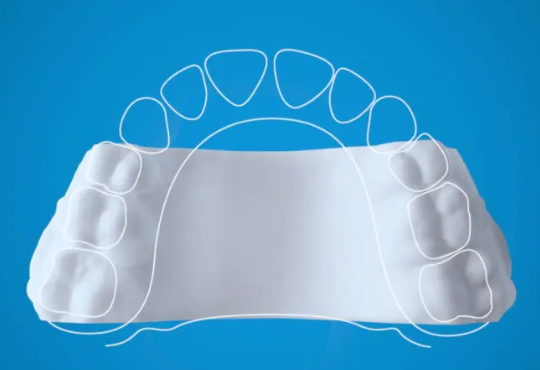
Interproximal reduction means the orthodontist polishes off a very thin layer of enamel from the sides of the teeth – where they touch each other. It’s often written as IPR in treatment plans and is also known as stripping, slenderising or enamel reduction. According to the British Orthodontic Society, the width of some teeth can be reduced by up to half a millimetre, and the space gained is used to line the teeth up.
Why is IPR done with aligners and braces?
The most common reason is lack of space: the teeth are crowded and there’s nowhere for them to line up. If only a little space is needed, it can be gained with IPR on a few teeth – and sometimes that avoids an extraction. With more severe crowding, an extraction may still be needed. Only your orthodontist can decide that after an examination and X-rays. IPR is done with both braces and aligners – if you’re still deciding between them, see aligners vs braces.
IPR can also slightly change the shape of the teeth. This sometimes shrinks the so-called “black triangle” – the small dark gap between teeth just above the gum. It appears when teeth are narrower near the gum and only touch at one point, far from it. Below that point there’s a gap the gum can’t fill. With IPR, the sides of the teeth are polished slightly so the teeth move closer together. They then touch over a larger area and closer to the gum, and the gap gets smaller. Research shows that when the contact point is no more than 5 mm from the bone beneath the gum, the gum fills the gap almost every time (98% of cases).
How is interproximal reduction done?
The enamel is removed in one of three ways:
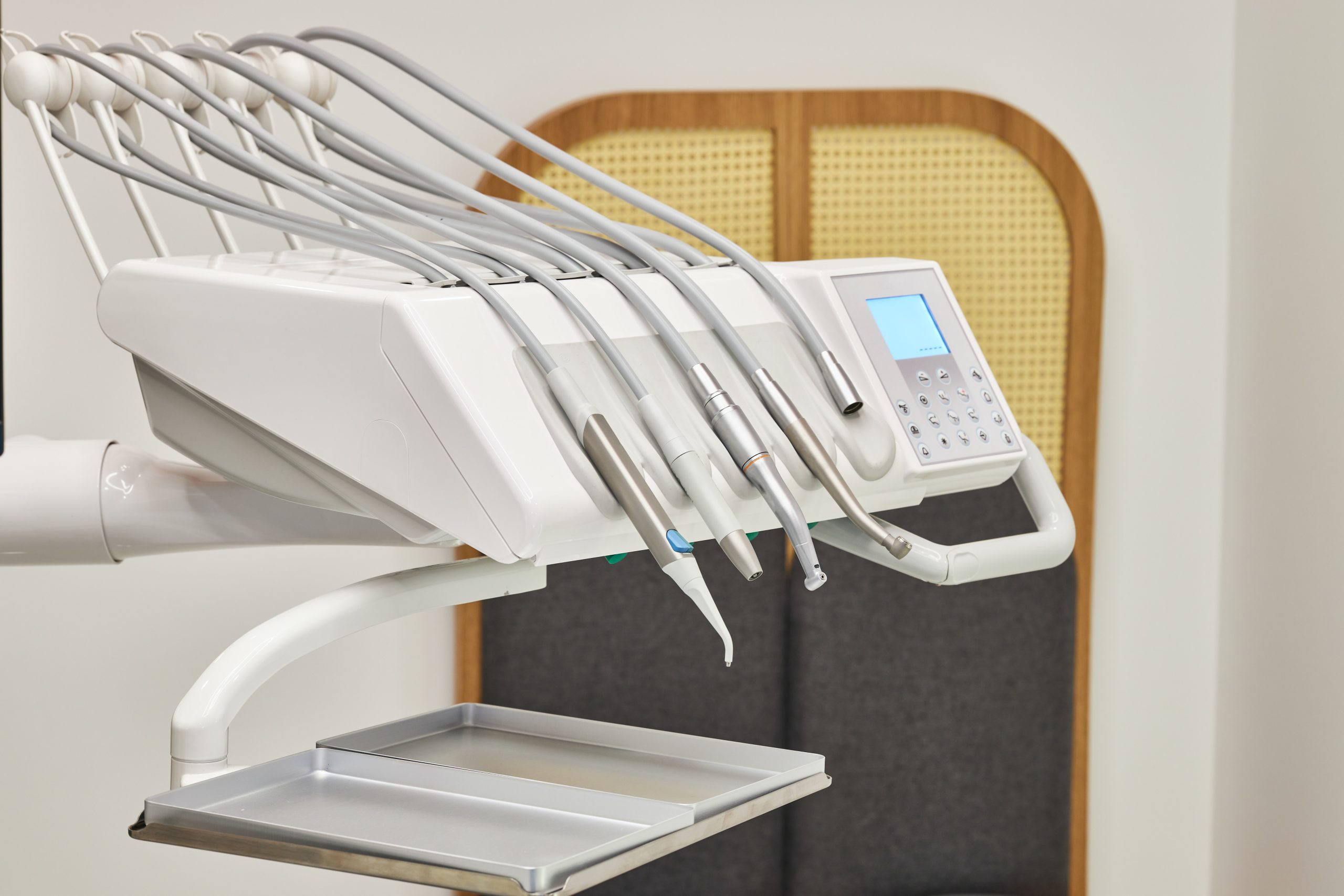
- with the dentist’s handpiece fitted with a very fine polishing bur;
- with the handpiece fitted with a thin rotating disc;
- by hand – with a thin abrasive strip (a bit like fine sandpaper) moved back and forth between the teeth.
There are also strips that the handpiece moves back and forth. According to 2022 research, these remove enamel in a more controlled way and leave a smoother surface than hand strips. Finally, the orthodontist checks with thin measuring gauges that exactly the right amount of space has been created.
The whole thing takes a few minutes and can be done in one go or over several appointments. Sometimes, a week before, small rubber rings (separators) are placed between the teeth to part them slightly. With aligners, the orthodontist plans in advance in the digital treatment plan exactly between which teeth and how much to polish.
How much enamel is removed, and does IPR damage your teeth?
As little as possible – usually no more than half a millimetre per tooth. Every tooth keeps enough enamel to stay healthy. Studies show that teeth that have had IPR don’t decay more often than others, and the procedure doesn’t make the gums more vulnerable. Research from 2025 also found no increase in decay, weaker enamel or gum problems after IPR.
There are two important conditions, though:
- It should be done by an experienced orthodontist. IPR is irreversible, and removing too much enamel does harm the teeth. That’s why how you choose an orthodontist matters – and why you shouldn’t trust DIY aligners planned without an examination.
- The surface should be polished afterwards. If it’s left rough, more plaque builds up on it. Your orthodontist may apply fluoride varnish, and may recommend an alcohol-free fluoride mouthwash at home. See also brushing your teeth with aligners.
Does IPR hurt?
No. There are no nerves in enamel, so no anaesthetic is needed. While it’s being done, though, you may feel an odd pressure – as if something is pulling or pushing on your teeth. Afterwards, some people have temporary sensitivity to hot and cold, which goes away within a few days.
If the sensitivity doesn’t settle after a few days, or it hurts, tell your orthodontist.
My experience with interproximal reduction
I had IPR several times during my treatment. Only the polishing itself was unpleasant, but it didn’t hurt. Afterwards I had a strange feeling that there were gaps between my teeth, but it disappeared within a day or two. 🙂
More questions? See the aligner questions I get asked most and what attachments are.
Sources
- British Orthodontic Society (2019). Interproximal Reduction (patient leaflet).
- British Orthodontic Society (2016). BOS Statement: Interproximal reduction.
- Gómez-Aguirre et al. (2022). Effects of interproximal enamel reduction techniques used for orthodontics: a systematic review. Orthodontics & Craniofacial Research, 25(3), 304–319.
- The Role of the Interproximal Enamel Reduction in Orthodontics: A Systematic Review (2025). Applied Sciences, 15(19), 10645.
- Barakat S. O. (2025). Interdental papilla recession and reconstruction of the lost triangle: a review of the current literature. Frontiers in Dental Medicine, 5, 1537452.
- Cleveland Clinic. Interproximal Reduction (IPR) (updated 08.11.2024).

Leave a Reply
You must be logged in to post a comment.