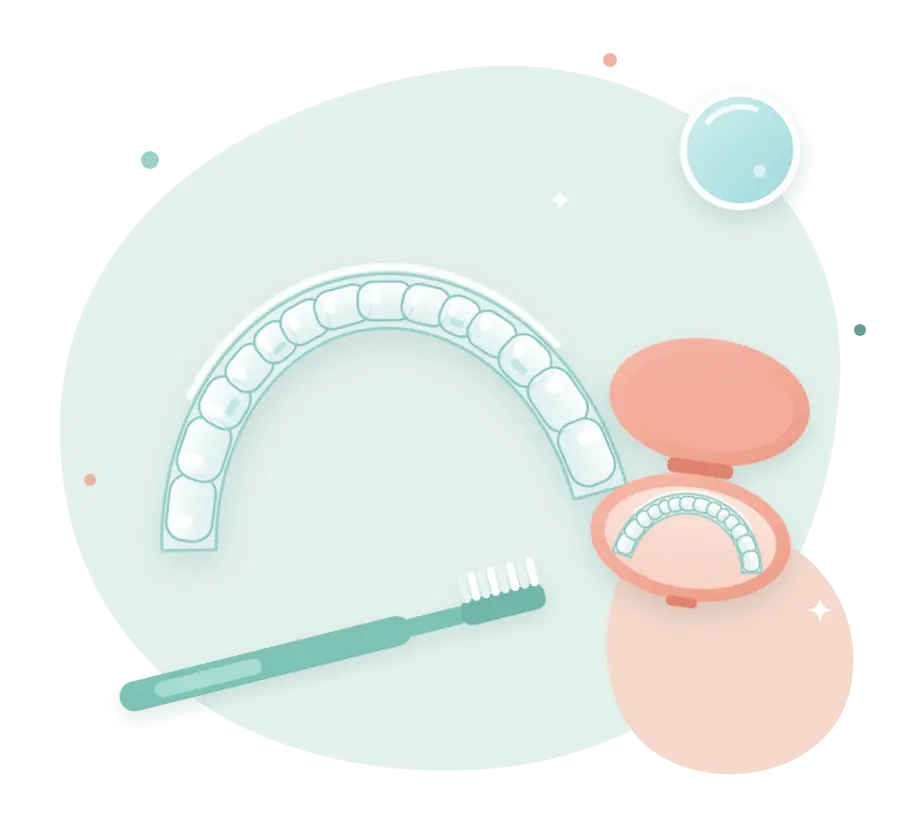
Bite ramps – when I got my first aligners with them, I literally didn’t know where to put my tongue. My jaw was tense, I kept pulling involuntary faces, and by the evening my jaw ached. 😅 It turned out this is completely normal and passes, but it made me think about something I’d never considered before: where your tongue is actually supposed to rest.
Here’s what bite ramps are, why they’re used and how to get used to them faster. My whole story is in my Invisalign experience.
Contents
What are bite ramps?
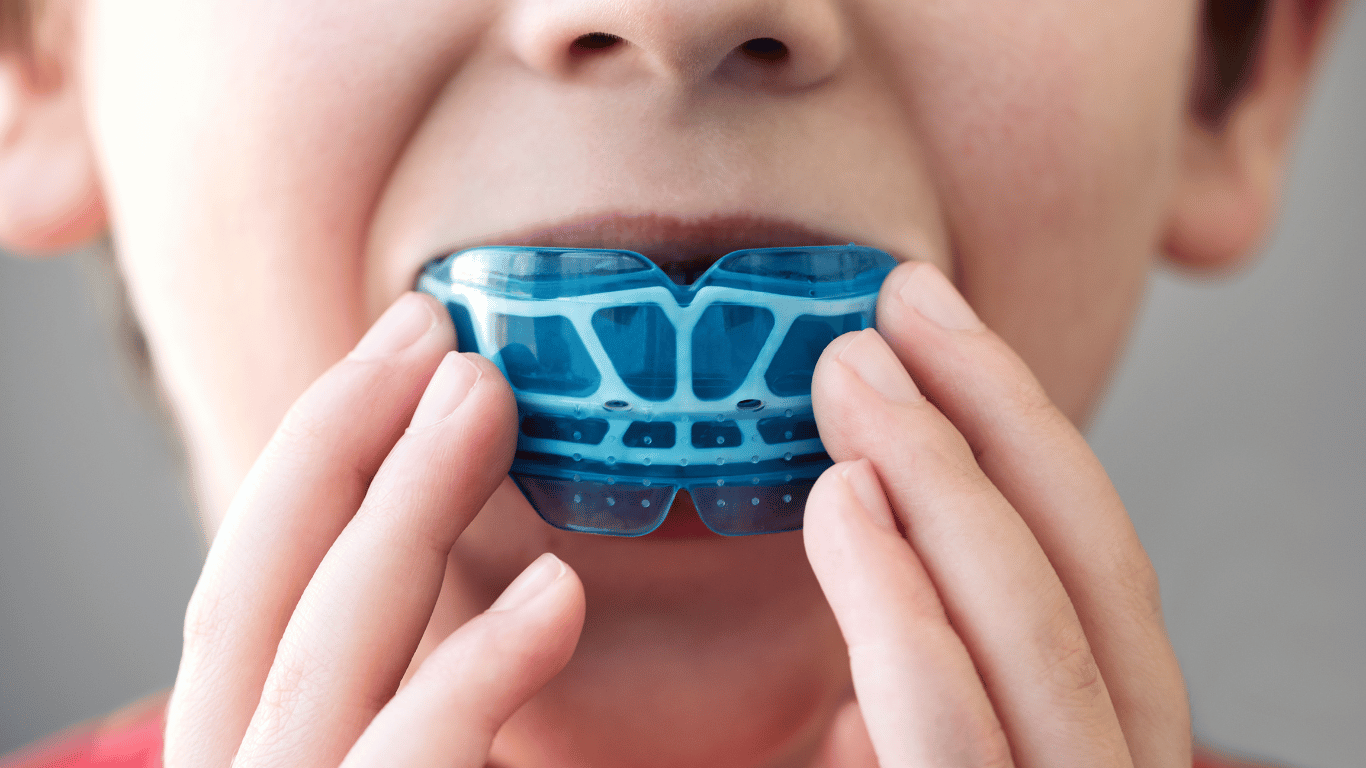
Bite ramps (on Invisalign, precision bite ramps) are small bumps on the inside of the aligner, most often behind the upper front teeth. They look a bit like an attachment bubble, but they’re part of the aligner plastic itself and aren’t bonded to your tooth. Here’s what one of my first aligners looked like:

What are bite ramps for?
They’re mainly used for a deep bite – when the upper front teeth overlap the lower ones too much. When you bite down, your lower front teeth hit the bite ramps and your back teeth no longer touch. That does two things:
- it creates room for your orthodontist to push the front teeth into the bone and let the back teeth come up slightly – which opens the bite;
- it stops your lower teeth and their attachments from hitting the upper aligner when you bite.
How well do they work? In a 2022 study, the computer plan (ClinCheck) promised more than actually happened in almost every patient – on average, about 43% of the planned bite opening was achieved, and no better than without bite ramps. Literature reviews are similar: a deep bite is one of the hardest things for aligners to fix. That’s why orthodontists often plan “with a margin”, so don’t be surprised if you need extra aligners.
Bite ramps help, but they don’t work miracles. If you have a deep bite, ask your orthodontist how many extra aligners are included in your package.
For children and teens who are still growing and whose lower jaw sits too far back, Invisalign has other options too – “precision wings” and the newer occlusal blocks, which hold the lower jaw forward. They’re a different tool for a different problem, so ask your orthodontist whether they apply to your child. More in Invisalign First.
What do bite ramps feel like at first?
For me, the first days were the hardest. My back teeth didn’t touch and it felt like my jaw was just “hanging”. I couldn’t find a comfortable way to relax it. My tongue kept exploring the new bumps, and by the evening my jaw ached from the tension.
What helped: consciously relaxing my jaw during the day, not clenching, and – most importantly – putting my tongue in the right place. If a bump scratches your tongue, a little orthodontic wax helps too.
Where should your tongue rest?
Just as I was wondering where to put my tongue, I learned that its position matters not only for comfort with bite ramps, but for your bite too. If you tend to push your front teeth with your tongue (for example when swallowing), it can work against your treatment and push them back afterwards.
The correct resting position: your whole tongue rests against the roof of your mouth, with the tip touching the palate just behind your upper front teeth – without pushing on them. Lips closed, teeth slightly apart.
That’s where your tongue stays day and night, except when you’re talking or eating. Most people need a few weeks of practice before it becomes a habit. Here’s a short video:
If you can’t manage on your own or you tend to breathe through your mouth, there’s a whole therapy for it – more in myofunctional therapy. Be careful with “mewing” videos on social media: good tongue posture is useful, but pressing hard against your palate has no proven effect on the shape of your face.
Does the discomfort go away?
Yes. For me, after 2–3 weeks the strange feeling disappeared, my jaw stopped aching and my tongue found its place. But if the jaw pain is strong, doesn’t ease, or the joint starts clicking, tell your orthodontist – more in when to call your orthodontist.
For the other bumps and cut-outs on aligners, see elastics and buttons and attachments.
Sources
- Blundell H. L., Weir T., Byrne G. (2022). Predictability of overbite control with the Invisalign appliance comparing SmartTrack with precision bite ramps to EX30. AJODO.
- Greco M., Rombolà A. (2022). Precision bite ramps and aligners: an elective choice for deep bite treatment. Journal of Orthodontics.
- Deep bite correction with clear aligners – after 26 years where are we at? (2025). Seminars in Orthodontics.

Leave a Reply
You must be logged in to post a comment.